
Honeywell Air Duct Cleaning in Arvada: A Homeowner’s Guide
If your Honeywell electronic air cleaner was running during your last duct cleaning, there’s a real chance the technician reset a problem instead of solving it. Collection cells left in place under negative pressure can bend, and bypass dampers get knocked out of position without anyone noticing. Honeywell-integrated systems in Arvada need a cleaning approach calibrated to their components, not a generic forced-air pass. This guide walks through what should happen, and what to check afterward. If you’d rather not sort it out yourself, call (866) 623-9426.
Honeywell equipment is everywhere in Arvada homes because builders install it, not because every cleaner understands it. Whole-home media air cleaners, electronic air cleaners, and zoning controls add filters and dampers that a standard cleaning crew may never have worked around. Treating those parts like ordinary sheet metal is how a $400 component becomes a problem on cleaning day. What follows is the process we use, explained in plain terms.
How Do Honeywell Whole-Home Air Cleaners Interact With Duct Cleaning?
Honeywell whole-home air cleaners sit in the return-air path, so they are directly in the way of the airflow a duct cleaning machine pushes and pulls. The F300 electronic air cleaner and F100 media cabinet both need to be handled before any negative-pressure work begins. The power has to be off, the collection cells or media filter removed, and the cabinet opening managed so the vacuum pulls from the right place instead of fighting the cleaner.
Here is the sequence that protects the equipment:
- Kill the power to the air cleaner. Electronic cells hold a charge and cycle on and off with the blower. A technician who skips this step puts fingers and cells at risk.
- Remove collection cells or the media filter. Cells come out for separate washing. The media filter gets inspected or replaced, not vacuumed in place.
- Seal or cap the cabinet opening. Negative pressure at the return should come from the duct system, not through an open air cleaner housing that can draw debris into the wrong cavity.
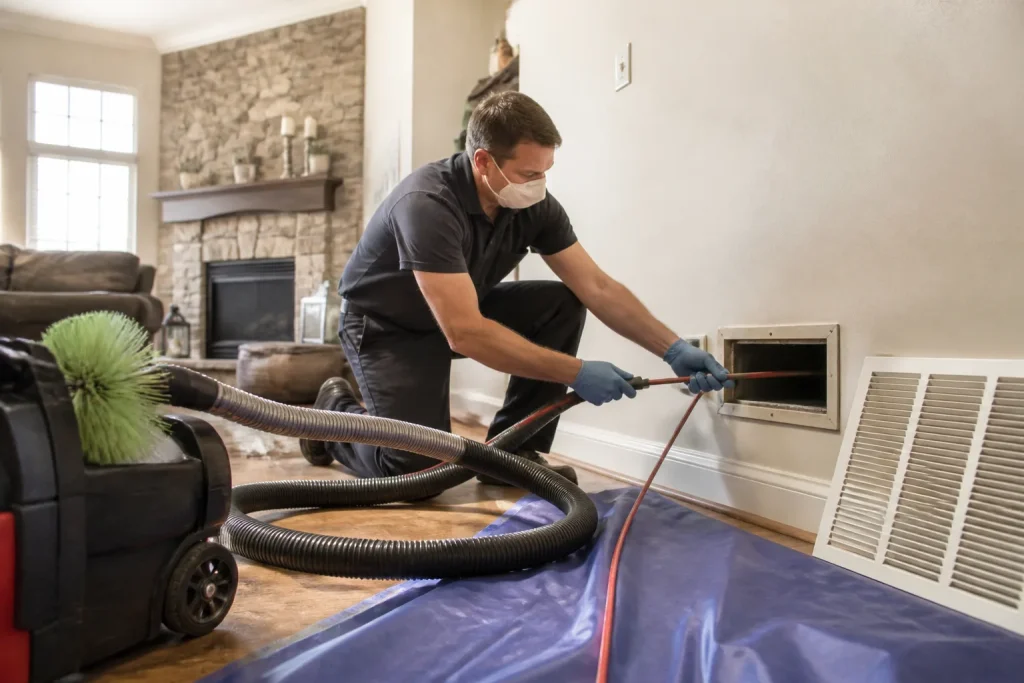
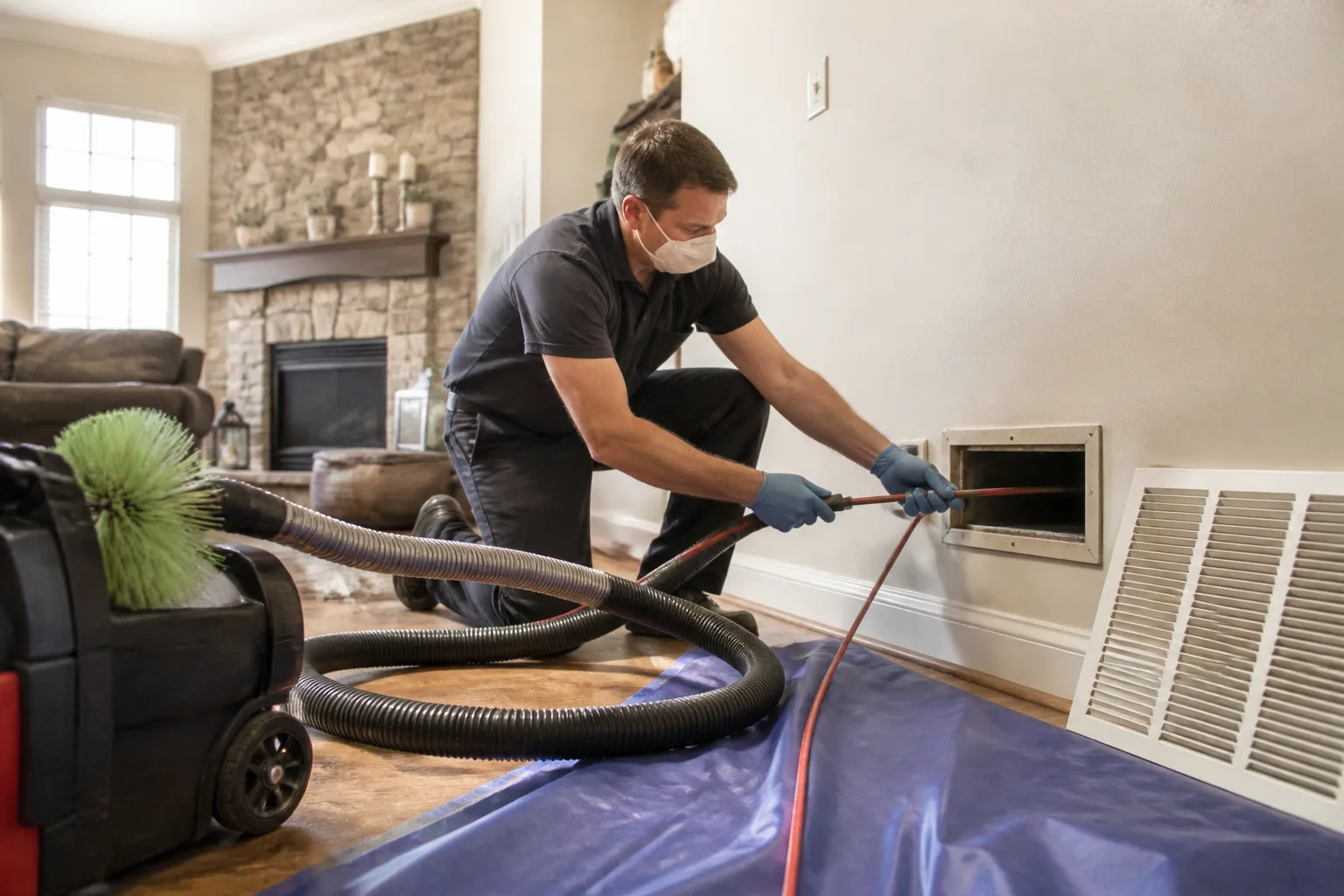
- Set up HEPA source-removal vacuum and mechanical agitation. We use Rotobrush agitation with Abatement Technologies HEPA-filtered vacuums so dislodged debris leaves the system rather than recirculating into the home.
Skip any step in that list and the air cleaner is what ends up paying for it. In Arvada, where homes run their furnaces hard through dry, cold winters, the return side sees a steady load of dust and pet hair. That makes the air cleaner work harder and makes careful cell handling more important, not less.
How Often Should Honeywell Filters and Cells Be Maintained?
Honeywell’s own maintenance recommendations differ from what a standard duct cleaning schedule assumes, and that gap causes most of the confusion. Media filters and electronic cells have their own intervals, separate from the duct system itself. Cleaning the ducts doesn’t reset the filter clock, and washing the cells doesn’t mean the ducts are clean.
Here is how the two schedules line up:
- Electronic collection cells: wash them based on Honeywell’s guidance for your model, which is more frequent than most people expect. A cell that’s loaded with dust stops collecting and starts restricting airflow.
- Media filters: replace on the manufacturer’s interval for the media cabinet. A clogged F100 media filter is a common cause of weak airflow that gets blamed on the ducts.
- Duct system: clean based on what’s inside. Visible debris, musty odors, recent renovation, or a new-to-you home are all reasons to look. A calendar alone won’t tell you.
In our experience, the most common call we get in Arvada starts with someone convinced their ducts are the whole problem when a dirty cell or an overdue media filter is doing most of the damage. We check both before recommending duct work. The point is to clean what actually needs cleaning, not to sell a service on a schedule that ignores the equipment.
How Do Honeywell Zoning Systems Affect Duct Cleaning?
Honeywell zoning systems split a home into zones with motorized dampers, and many of those zones use bypass dampers that redirect excess air when only one zone calls for heat or cooling. That bypass creates pressure imbalances in the duct system. Debris that would normally travel through the main trunk can settle in the secondary zones that see less airflow day to day.
Before cleaning a zoned system in an Arvada home, a technician needs to map the zone layout. That means knowing which dampers serve which rooms, where the bypass damper sits, and which trunks are normally closed off. Clean a zoned system as if it were a simple single-zone setup and two things go wrong: secondary zones get missed entirely, and the bypass damper gets forced out of position by the cleaning equipment.
What a proper zoned cleaning involves:
- Identifying every zone and the damper controlling it
- Checking damper position and function before work starts, so anything already stuck is documented
- Opening each zone in turn so every branch gets full vacuum and agitation
- Confirming the bypass damper returns to a working position afterward
Zoning is also where Honeywell and Aprilaire equipment often overlap in the same home, since both brands make controls and air quality components that get paired. Knowing how the controls talk to each other matters when you’re deciding what to clean and what to leave alone. If you want the full picture of how we handle whole-system work, our air duct cleaning page covers the process from start to finish.
What Should You Verify on a Post-Cleaning Inspection?
After the cleaning is done, the equipment has to go back together correctly, and that’s the step most homeowners never think to check. A system that looks clean but has a cell installed wrong or a damper stuck open will underperform in ways that show up weeks later as weak airflow or a filter that loads up fast.
Walk through this list with whoever did the work:
- Cell re-installation. Collection cells should be seated fully in their tracks, contacts aligned, and the power restored and tested. Ask to see the unit power on and confirm the indicator shows it’s working.
- Media filter condition. If the filter was due for replacement, confirm it was replaced with the correct size and rating for the cabinet, not a generic cut-to-fit.
- Damper function. In a zoned system, each damper should open and close on command. Have the technician cycle the zones so you can hear and feel the difference at the registers.
- Airflow balance. Check that every register has strong, even flow afterward. A zone that was weak before and still feels weak may point to a duct problem the cleaning didn’t fix.
- Before-and-after photos. Ask for photos of your own ducts. Good work is verifiable, and a company that can’t show you what changed is asking you to take it on faith.
If the inspection turns up a gap, a torn connection, or a loose joint, that’s the moment to address it. Our technicians can seal it during the same visit rather than leave you calling a second contractor for HVAC cleaning and repair. That capability is why we ask to see the whole system before we start, not just the ducts.
Can You Upgrade Honeywell IAQ Equipment During a Cleaning?
Sometimes the honest answer is that the equipment is past its useful life and a cleaning is the right moment to think about replacing or upgrading it. A Honeywell legacy electronic air cleaner near the end of its run is a good example. If the cells are warped or the power supply is failing, cleaning it is throwing good money after bad.
Before recommending anything, we look at three things: the condition of the existing cabinet, whether the duct opening supports a newer component without rework, and whether the homeowner actually wants what the upgrade delivers. A media air cleaner and an electronic air cleaner do different jobs, and neither one is automatically “better.” What works in an Arvada home depends on the system, the occupants, and how the home is used.
We work with Honeywell and Aprilaire IAQ components, so an upgrade conversation covers real options rather than a single brand we happen to stock. Two practical notes:
- A newer electronic air cleaner and an older one often use different filter cell sizes, so the cabinet may need adjustment or replacement.
- Upgrading the air cleaner doesn’t fix a duct problem. Seal leaks and gaps first, then size the air cleaner to the system you actually have.
There’s a quiet satisfaction in pulling a cell out, seeing how much it caught, and knowing the system is doing its job. When it isn’t, we’d rather tell you than clean around the problem.
When Should You Call a Pro for Honeywell System Cleaning?
Some maintenance is a homeowner task. Washing cells and swapping media filters are reasonable to do yourself if you follow the manufacturer’s guidance. But anything that involves opening the duct system, working under negative pressure, or handling the electrical side of an air cleaner is a job for someone with the right equipment and training. An electronic air cleaner’s power supply and the blower circuit are not places to learn by trial.
Call a professional when you notice:
- Musty or stale odors coming from the vents
- Dust collecting faster than it used to
- Weak airflow at some registers but not others, especially in a zoned system
- A recent renovation, purchase, or pest issue that may have left debris in the ducts
Honeywell equipment offers a lot of value when it’s maintained correctly, and very little when it isn’t. The two failure modes we see most in Arvada are cells that stopped collecting and bypass dampers stuck in a position nobody checked. Both are fixable, and neither gets better with time.
Related services in Arvada: Our dryer vent cleaning service addresses a vent system that shares the same dust and lint problem. Arvada Air Duct Cleaning Pros can look at both in one visit.
The Bottom Line
Honeywell whole-home air systems deserve a cleaning approach built around their components, not a generic pass that ignores the cells and dampers. The key takeaways: manage power and remove cells before negative-pressure work, keep filter and cell maintenance on its own schedule separate from the ducts, map the zone layout before cleaning a zoned system, and verify cell re-installation and damper function on the inspection. A proper cleaning protects the equipment you already own and shows you what’s actually happening in your home’s air system.
At Arvada Air Duct Cleaning Pros, we run mechanical agitation plus HEPA source-removal so debris leaves your home rather than recirculating. If we find a gap or a loose connection, we can seal it on the spot. Our technicians have up to 10 years of experience, and we work with Honeywell and Aprilaire equipment regularly. If you’re in Arvada and need help, Arvada Air Duct Cleaning Pros offers free estimates. Call (866) 623-9426.
Frequently Asked Questions
There’s no flat rate we can quote here, because cost depends on your system size, the number of zones, and whether repair or sanitizing is needed. A Honeywell air cleaner adds some labor for cell removal and re-installation, but the price is set per job by a written estimate. That means one flat price per system, agreed before work starts, with no per-vent pricing. Call (866) 623-9426 for an exact quote. Estimates are free.
Yes. Power must be off and the collection cells or media filter removed before any negative-pressure work begins. Running a cleaning vacuum against a live electronic air cleaner risks damaging the cells and the power supply. A trained technician handles this as part of the job. Call (866) 623-9426 if you’re unsure what your system needs.
Cleaning should be based on conditions, not a fixed calendar. Visible debris, musty odors, recent renovations, or a new-to-you home are reasons to look. Filter and cell maintenance follows a separate schedule from Honeywell’s guidance for your model. In our experience, the two get confused often. Call (866) 623-9426 and we’ll help you sort out what actually needs attention.
Ask for before-and-after photos of your own ducts, and walk the post-cleaning inspection with the technician. Check that cells are seated correctly, dampers cycle on command, and airflow is even at every register. We provide photos as part of the job. Call (866) 623-9426 to book an estimate and see the process for yourself.
Written by the team at Arvada Air Duct Cleaning Pros.
Need Air Duct Cleaning Help?
Call Arvada Air Duct Cleaning Pros - the local pro we connect you with is licensed and insured, here with fast help in Arvada.
(866) 623-9426